
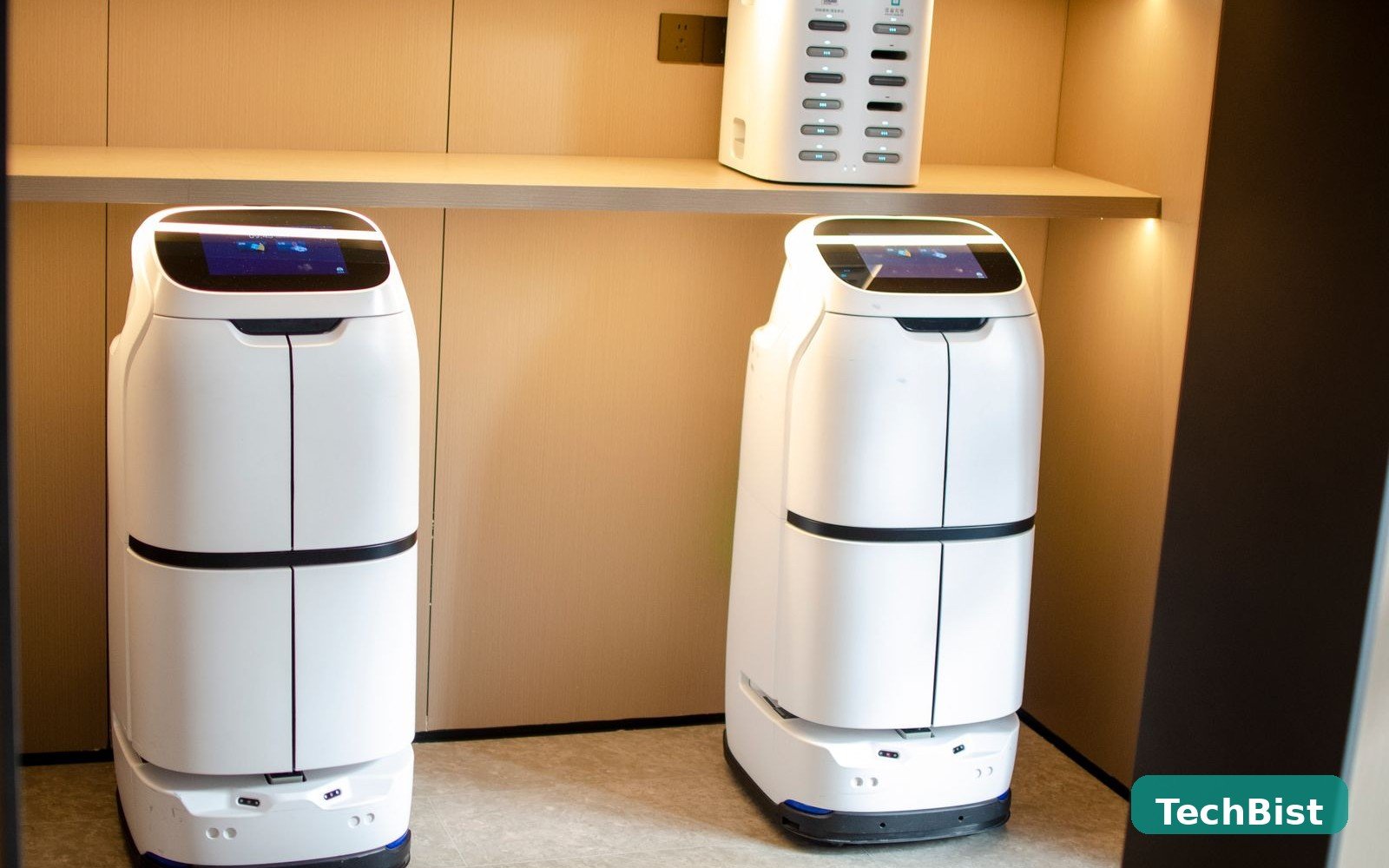
Walk into a modern warehouse and you may notice something quietly remarkable: small robots gliding between shelves, carrying bins, pausing politely when a person steps into their path, then continuing on their way without any driver, remote control, or track on the floor. These are autonomous mobile robots, or AMRs, and they are one of the clearest examples of physical AI in action — machines that combine artificial intelligence with a body that moves through the real world.
This guide explains AI-powered autonomous mobile robots from the ground up: what they are, how they differ from older automated vehicles, how they perceive and navigate their surroundings, where they are used today, how fleets of them are managed, and what to consider if you are thinking about working with them. If you are new to robotics software, our beginner’s guide to ROS 2 is a good companion read, since much of the AMR world runs on it.
What Is an Autonomous Mobile Robot?
An autonomous mobile robot is a self-driving vehicle designed to move materials, goods, or equipment around a facility without a human driver and without fixed infrastructure such as magnetic tape or rails on the floor. Unlike a remote-controlled machine, an AMR decides its own route: you give it a destination, and it figures out how to get there, avoiding obstacles and adapting when the environment changes.
The word “autonomous” does a lot of work here. It does not mean the robot is unsupervised or making business decisions on its own. It means the robot handles the driving itself — sensing, localizing, planning, and moving — within a mission assigned by a person or a warehouse management system. The overview of the autonomous mobile robot traces how these machines evolved from guided vehicles into genuinely self-navigating systems.
A typical AMR has four main parts. First, a mobile base with wheels (or sometimes legs or tracks) and motors. Second, a sensor suite: lidar, cameras, depth sensors, and wheel encoders that tell the robot where it is and what surrounds it. Third, a computer running the navigation and AI software. Fourth, a payload interface: a shelf, bin, conveyor, or lift that carries whatever the robot is transporting. Different AMRs emphasize different parts — a hospital delivery robot prioritizes quiet operation and hygiene, while a factory AMR prioritizes payload and ruggedness — but the architecture is broadly the same.
AMRs vs AGVs: Why the Difference Matters
Before AMRs, the standard solution was the automated guided vehicle, or AGV. AGVs follow fixed paths defined by magnetic tape, wires buried in the floor, or reflectors on the walls. They are reliable and predictable, but they are also inflexible: change the layout of your warehouse, and you must re-lay the guidance infrastructure. If something blocks the path, an AGV simply stops and waits, because it has no way to go around.
AMRs remove that constraint. Because they build their own map of the environment and localize themselves within it, they can choose a new route when one is blocked, and they can be deployed in a new facility without installing floor infrastructure. This flexibility is the reason AMRs have spread so quickly: warehouses change constantly, with seasonal layouts, temporary storage, and shifting workflows, and a robot that adapts is far more useful than one that needs the building to adapt to it.
The trade-off is complexity. An AMR needs far more software than an AGV: mapping, localization, perception, planning, and safety systems, all running reliably in real time. That software is also where AI enters the picture. Classical navigation algorithms handle much of the driving, but modern AMRs increasingly use machine learning for perception — recognizing people, pallets, forklifts, and obstacles — and for predicting how dynamic environments will change. The result is a robot that is not just following a line, but genuinely understanding its surroundings well enough to move through them safely.
How AMRs See the World
An AMR’s first job is perception: turning raw sensor data into a useful picture of the world. Lidar is the workhorse sensor. It sweeps laser beams around the robot and measures distances, producing a two-dimensional (or increasingly three-dimensional) map of walls, racks, and obstacles. Lidar works in the dark, is precise at range, and is relatively unaffected by lighting, which is why nearly every AMR carries one.
Cameras add what lidar cannot see: color, texture, and semantics. A camera can tell a person from a pallet, read a floor marking, or recognize a docking station. Depth cameras combine both, giving each pixel a distance as well as a color, which is useful for detecting low obstacles that a 2D lidar might miss. Wheel encoders and inertial sensors fill in the gaps, tracking how far the robot has actually moved, so it can cross-check what its other sensors report.
Sensor fusion is the process of combining these sources into one consistent picture. No single sensor is perfect — lidar can be confused by glass, cameras struggle in darkness, encoders drift over distance — but together they compensate for each other’s weaknesses. Modern AMRs run fusion continuously, updating their world model many times per second, so the robot always has a fresh view of its surroundings before it decides to move.
How AMRs Navigate
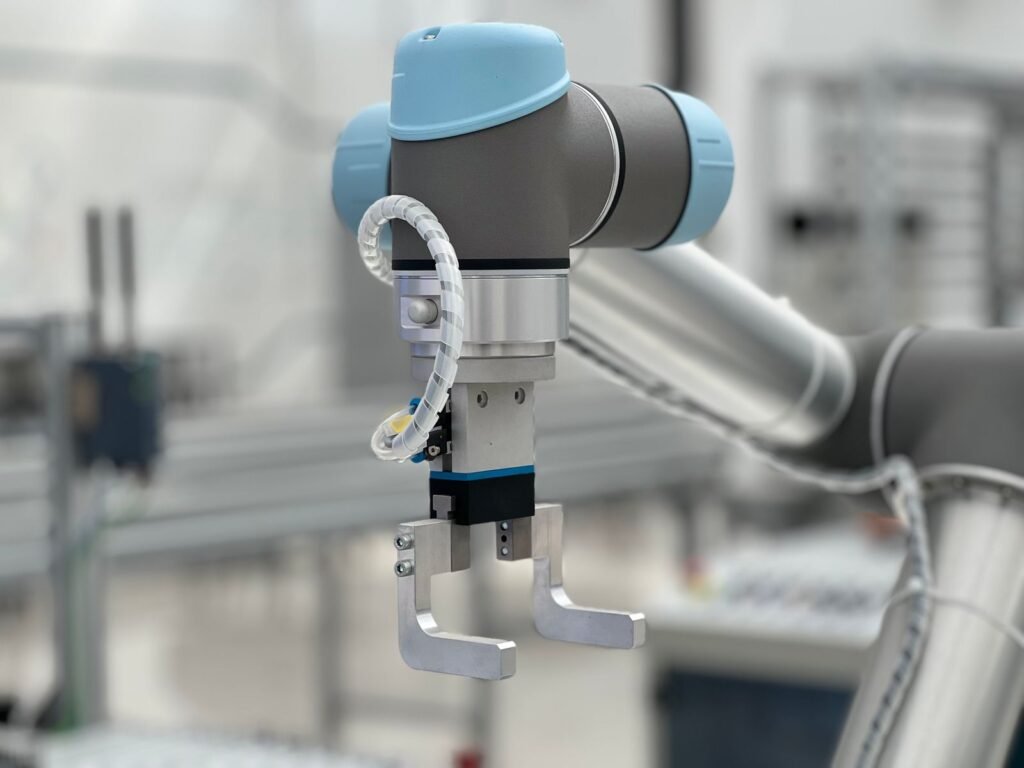
Navigation is usually described in three layers. The first is mapping and localization: before an AMR can work in a facility, it builds a map, either by being driven around once while recording sensor data, or by exploring on its own. Afterwards, it localizes itself within that map — figuring out where it is — by matching current sensor readings against the stored map. The classic technique is called SLAM, simultaneous localization and mapping, and it is one of the foundational algorithms in mobile robotics.
The second layer is global planning: given a destination, the robot computes a route through the map, like a satnav finding a route through city streets. This route avoids known obstacles and prefers wide, clear aisles. The third layer is local planning: as the robot drives, it continuously adjusts its speed and steering to avoid obstacles that were not on the map — a person walking across its path, a pallet left in an aisle — while still progressing toward its goal.
The navigation stack is where much of the practical engineering lives. In the ROS 2 ecosystem, the standard navigation framework is Nav2, which provides the planners, controllers, and recovery behaviors that real AMRs use in production. If you want to understand AMR navigation in depth, studying Nav2’s architecture — its behavior trees, costmaps, and planners — is one of the best investments you can make, because the same concepts appear in commercial systems under different names.
Where AMRs Work Today
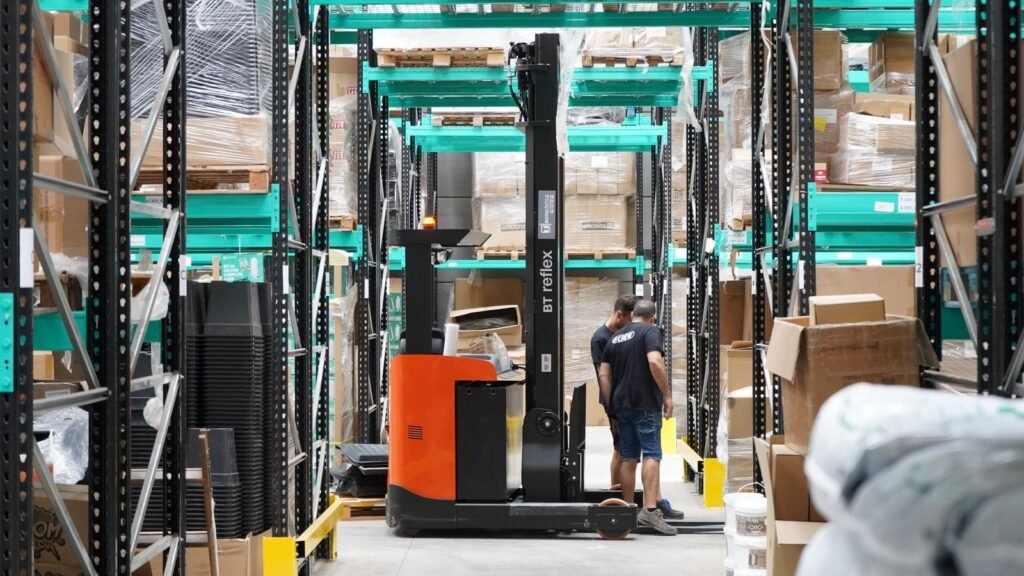
Warehouses and logistics centers are the biggest adopters. AMRs move goods from receiving to storage, from storage to picking stations, and from picking to packing, cutting down the walking that human workers would otherwise do. In a large facility, workers can walk many kilometers per shift; AMRs take over the transport, letting people focus on picking, packing, and quality checks, which are tasks humans do better.
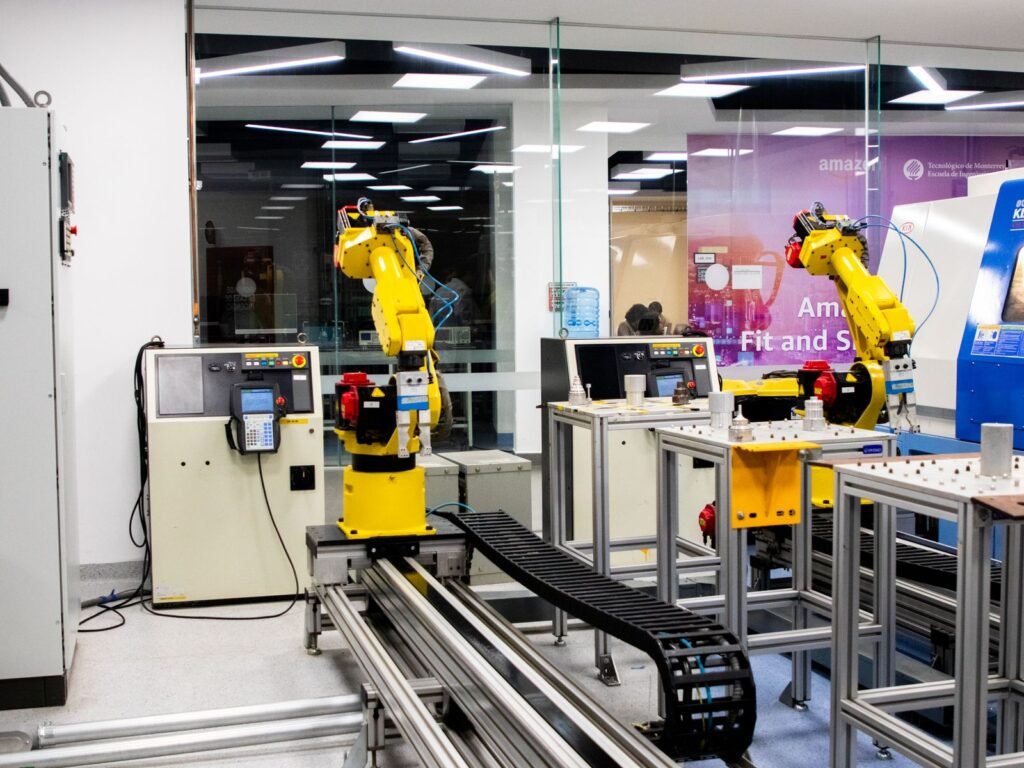
Manufacturing uses AMRs to feed production lines: delivering parts to workstations just in time, moving finished goods to inspection, and shuttling materials between cells. Because AMRs are flexible, a factory can reconfigure a line without re-laying guide tape, which matters when product runs are short and changeovers are frequent.
Hospitals are a growing market. AMRs deliver meals, linens, medicines, and lab samples through corridors shared with staff, patients, and visitors. Here the requirements shift: quiet operation, strict hygiene, gentle acceleration, and the ability to call elevators and open automatic doors. The payoff is significant, because delivery runs are repetitive, time-sensitive, and currently done by skilled staff whose time is better spent on care.
Other settings are emerging: hotels delivering room service, farms moving produce, airports handling baggage carts, and offices running internal mail. The common thread is the same everywhere — repetitive transport over a known indoor area, where the robot’s job is to move things so people do not have to.
Safety: Sharing Space with People
An AMR’s most important feature is not its speed or payload, but its safety. These robots work in spaces shared with people, so they must be designed so that a collision is extremely unlikely, and harmless if it somehow happens. Safety starts with the sensors: lidar and cameras watch for people in all directions, and the robot slows down as anything gets closer, stopping entirely if something enters its safety zone.
Speed limits are part of the design. Most indoor AMRs travel at walking pace or slower, and they slow further in crowded areas, at corners, and when their sensors have limited visibility. Audible signals and lights warn people of the robot’s presence and intentions — a common convention is a light strip that changes color with the robot’s state, and a gentle beep when it is about to move or turn.
Standards govern all of this. Industrial mobile robots are covered by safety standards that specify stopping distances, force limits, and how safety functions must be designed and tested. A responsible deployment also includes operational rules: marked robot lanes where possible, training for staff who share the space, and a clear procedure for what to do when a robot stops unexpectedly. Technology handles most of the safety, but the human procedures around it matter just as much.
Fleet Management: Many Robots, One Brain
A single AMR is useful; a fleet is transformative. Fleet management software assigns missions to robots, coordinates traffic so robots do not block each other in narrow aisles, manages charging so robots top up during quiet periods, and monitors the health of every robot in real time. When a robot reports a fault, the fleet manager can reroute its work to others and alert a technician.
Traffic management is a genuinely hard problem. In a busy warehouse, dozens of robots share the same aisles, and naive routing leads to congestion and deadlock — robots facing each other in a narrow corridor, neither able to pass. Fleet managers solve this with traffic rules: one-way aisles, priority at intersections, waiting zones, and centralized scheduling that plans routes for the whole fleet rather than letting each robot decide alone. Good fleet software is often the difference between a deployment that scales and one that stalls at a handful of robots.
Integration with the rest of the business is the other half of fleet management. AMRs become truly valuable when they connect to warehouse management systems, manufacturing execution systems, and elevator or door controllers, so a mission can flow automatically from an order in the system to a robot arriving at a workstation. This integration work is less glamorous than the robots themselves, but it is where most deployment projects spend their time, and it is a skill in high demand.
Challenges and Limits
AMRs are not magic, and honest guides should say where they struggle. Highly dynamic environments with many people moving unpredictably — a crowded public space, for example — remain difficult, because prediction gets harder as the scene gets busier. Very tight spaces, ramps, and outdoor terrain with rain, mud, or uneven ground also push current systems to their limits, which is why most AMRs still work indoors on flat floors.
Cost is another factor. The robot itself is only part of the investment; integration, fleet software, facility changes, staff training, and ongoing maintenance all add up. A deployment makes financial sense when the transport volume is high and repetitive, and it makes less sense for occasional, irregular moves. A careful pilot — a few robots on one workflow, measured honestly — is the right way to find out whether the numbers work for your facility.
Finally, AMRs change jobs. They remove the most repetitive transport work, which is usually a good thing, but organizations need to plan for the transition: retraining staff for supervision, maintenance, and exception handling, and being honest with workers about what changes. The deployments that succeed treat people as part of the system, not as an obstacle to it.
Getting Started with AMRs
If you want to work with AMRs, the practical path is straightforward. First, learn the fundamentals of mobile robotics: mapping, localization, path planning, and control. Simulation is your friend here — you can run a complete AMR in a simulator on an ordinary computer, practicing navigation without buying hardware. Our guide to the best robotics simulation software covers the tools, and the ROS 2 beginner’s guide explains the software framework that most AMR projects use.
Second, study a real navigation stack, such as Nav2, and build a small project: a simulated robot that navigates to a goal, avoids obstacles, and recovers when it gets stuck. Third, if you can, get hands-on with a real robot — many universities, makerspaces, and vendors offer access — because real sensors and real floors teach lessons that simulation cannot. The field needs people who understand both the AI and the physical reality, and that combination is exactly what makes AMRs such a rewarding area to work in.
To keep learning, browse the Robotics & Physical AI category and the TechBist blog for related guides, and start from the TechBist homepage whenever you need a plain-language explanation of a new technology.
AMRs and the Human Workforce
The most important question about AMRs is not technical but human: what happens to the people who used to do the carrying? The honest answer is that roles change rather than simply disappearing. In facilities that deploy AMRs well, workers move from pushing carts and walking long distances to supervising fleets, handling exceptions, maintaining robots, and doing the skilled picking and packing work that robots cannot do. The physical strain of the job falls, and the work becomes more varied and less exhausting.
This transition needs planning. Workers should be involved early — shown the robots, told what will change, and trained for their new roles before the robots arrive. Facilities that surprise staff with automation breed resentment and resistance; facilities that involve staff get practical feedback that improves the deployment, because the people who know the workflow best are the ones doing it today. Unions and worker representatives, where present, should be part of the conversation from the start.
There is also a broader point worth stating plainly. AMRs are most valuable when they take over work that is dull, dirty, or physically demanding — the “three Ds” of undesirable labor. Used that way, they make jobs better, not just cheaper. Used purely as a headcount reduction tool, with no thought for the people affected, they create the very resistance that sinks deployments. The technology is ready; the organizational work of deploying it well is what determines success.
Frequently Asked Questions
What is the difference between an AMR and an AGV?
An AGV follows fixed paths defined by tape, wires, or reflectors installed in the floor, and it stops when its path is blocked. An AMR builds its own map, localizes itself within it, and plans its own routes, so it can go around obstacles and adapt to layout changes without new floor infrastructure. AMRs are more flexible but need more sophisticated software.
Do AMRs replace human workers?
They replace repetitive transport work, not people as a whole. In warehouses, AMRs typically take over the walking and carrying, while people focus on picking, packing, quality checks, and supervision. Successful deployments retrain staff for robot supervision, maintenance, and exception handling, and measure the result in productivity and worker wellbeing, not just headcount.
Are AMRs safe around people?
Yes, when designed and deployed properly. AMRs use lidar and cameras to detect people, slow down as obstacles approach, and stop if anything enters their safety zone. They travel at walking pace or slower, signal their intentions with lights and sounds, and are built to safety standards for industrial mobile robots. Operational rules and staff training complete the safety picture.
Can AMRs work outdoors?
Some can, but most current AMRs are designed for indoor, flat-floor environments. Outdoor operation adds rain, uneven terrain, GPS limitations, and far more unpredictable obstacles, which are active research and engineering challenges. Rugged outdoor AMRs exist for agriculture, mining, and logistics yards, but they are a separate, more specialized market.
How much does an AMR deployment cost?
The robot is only part of the cost. Fleet management software, integration with warehouse or factory systems, facility preparation, training, and maintenance all contribute. Costs vary widely by payload, volume, and complexity, which is why a small pilot on one workflow — with honest measurement of throughput, reliability, and labor saved — is the recommended way to evaluate whether AMRs pay off for a specific facility.
1 thought on “AI-Powered Autonomous Mobile Robots”