
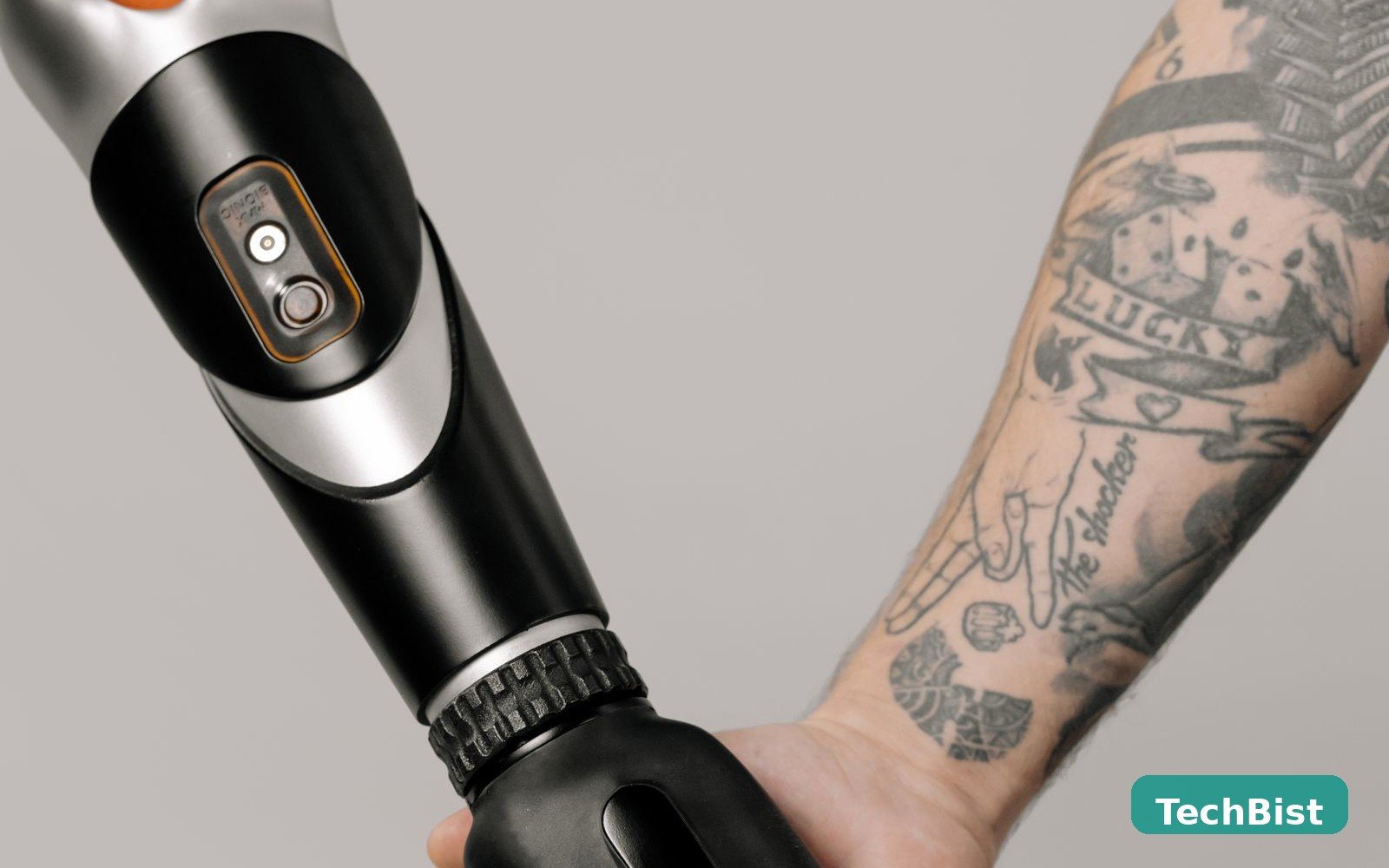
Robots used to work behind fences. In traditional factories, industrial robots were powerful, fast, and dangerous, so they were caged away from people, and interaction meant pressing a button on a control panel from a safe distance. That era is ending. Robots now work beside people on factory floors, in hospital corridors, in homes, and in public spaces — and that shift has created an entire field devoted to one question: how should robots and humans interact?
Human-robot interaction, or HRI, studies how people and robots perceive each other, communicate, collaborate, and build trust. It draws on robotics, psychology, design, and AI, because a robot that works with people must be not only capable, but understandable, predictable, and safe. This guide explains the key ideas: how robots perceive people, how they communicate, how they collaborate, and what makes people trust — or reject — a robot. For the navigation side of shared spaces, our guide to how robots use AI for navigation is a useful companion.
Why Interaction Matters Now
The reason HRI matters is that robots are leaving structured, fenced environments and entering human ones. A warehouse robot shares aisles with workers. A hospital robot shares corridors with patients. A home robot shares living rooms with families, children, and pets. In all of these settings, the robot’s success depends not just on what it can do, but on how people experience it: whether they feel safe around it, understand what it is doing, and can work with it effectively.
Poor interaction has real costs. A robot that moves unpredictably makes people nervous, even if it is technically safe. A robot that cannot explain itself frustrates users when it fails. A robot that demands constant attention wastes the time it was supposed to save. Conversely, good interaction multiplies a robot’s value: workers who trust a collaborative robot use it more effectively, patients who understand a hospital robot cooperate with it, and families who enjoy a home robot keep using it.
HRI is therefore not a cosmetic concern — it is a core engineering discipline, as important to deployment success as motors and sensors. The field of human-robot interaction brings together researchers from robotics, psychology, and design to study exactly these questions, and its findings increasingly shape how commercial robots are built.
How Robots Perceive People
Interaction starts with perception: a robot must detect people, understand what they are doing, and predict what they will do next. Cameras and lidar detect the presence and position of people; pose estimation algorithms infer body posture — whether a person is standing, reaching, walking, or sitting. Face detection and gaze tracking tell the robot where a person is looking, which is a strong signal of attention and intention: a person looking at the robot is probably about to interact with it.
Gesture and speech recognition add more channels. A wave, a point, a thumbs-up, or a spoken command are all ways people naturally communicate, and robots that understand them feel far more natural than robots that require a touchscreen menu for every interaction. Modern systems use deep learning for all of these perception tasks, trained on large datasets of human behavior, and they are steadily improving — though they still struggle with occlusions, unusual postures, and diverse populations, which is an active area of fairness research.
Prediction is the hardest part of perception. To move safely and helpfully around people, a robot must anticipate: will this person step left or right? Are they about to reach for that object? Are they busy and should not be interrupted? Learned models of human motion, trained on crowd data, help with short-term prediction, and context helps with longer-term inference: a person standing at a workstation is probably working there, while a person walking briskly down a corridor is probably passing through. Prediction will never be perfect, which is why robots are designed to be cautious when uncertain — slowing down, keeping distance, and signaling intentions.

Communication: How Robots Talk to Us
Robots communicate through many channels, and the best ones use several at once. Speech is the most natural: a robot that can speak and understand spoken language can explain itself, ask questions, and take instructions in the way people already communicate. But speech has limits — it fails in noisy environments, it can be intrusive, and it does not work well for precise spatial information like “move slightly to the left.”
Visual signals fill many gaps. Lights, displays, and projected indicators can show a robot’s state (idle, busy, charging), its intentions (about to turn left, about to move), and its needs (blocked, waiting for help). A light strip that changes color with the robot’s state, or a display showing its planned path, can make a robot’s behavior far more legible to the people around it. Movement itself is a communication channel: a robot that slows before turning, or that approaches a person from the front rather than from behind, is signaling its intentions through its motion.
Touch and physical interaction matter too, especially for collaborative robots. A worker guiding a robot arm by hand to teach it a task — a technique called kinesthetic teaching — is communicating through touch. Force sensors let the robot feel resistance and respond gently, which is essential when a robot and a person share a workpiece. The design principle across all channels is legibility: a robot should make its state and intentions easy for people to read, so that humans can predict it, trust it, and work with it efficiently.
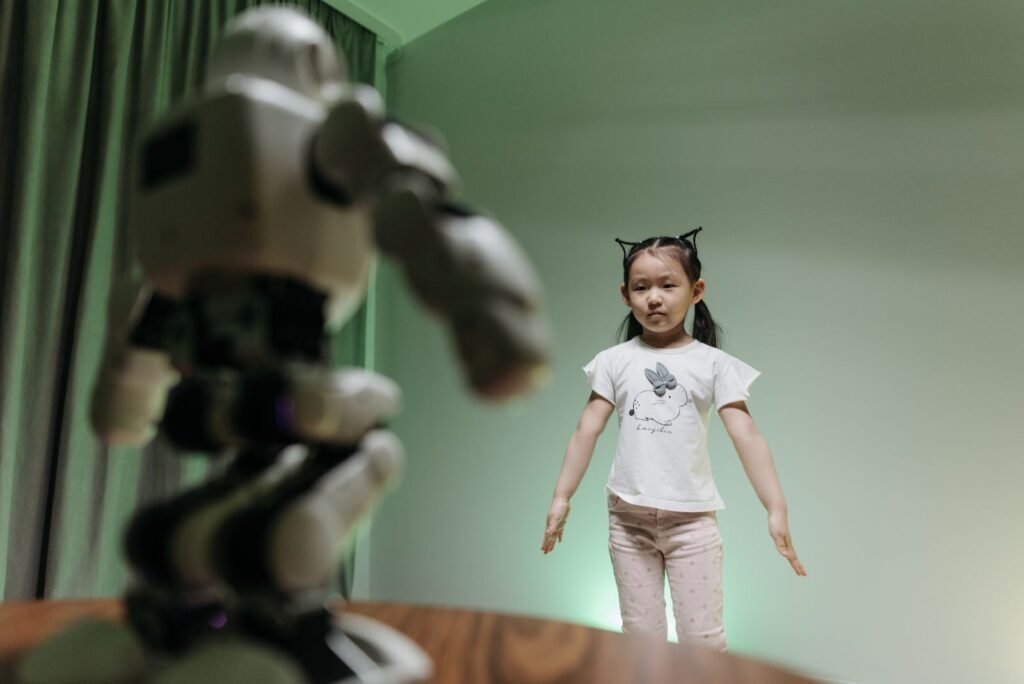
Collaboration: Robots as Teammates
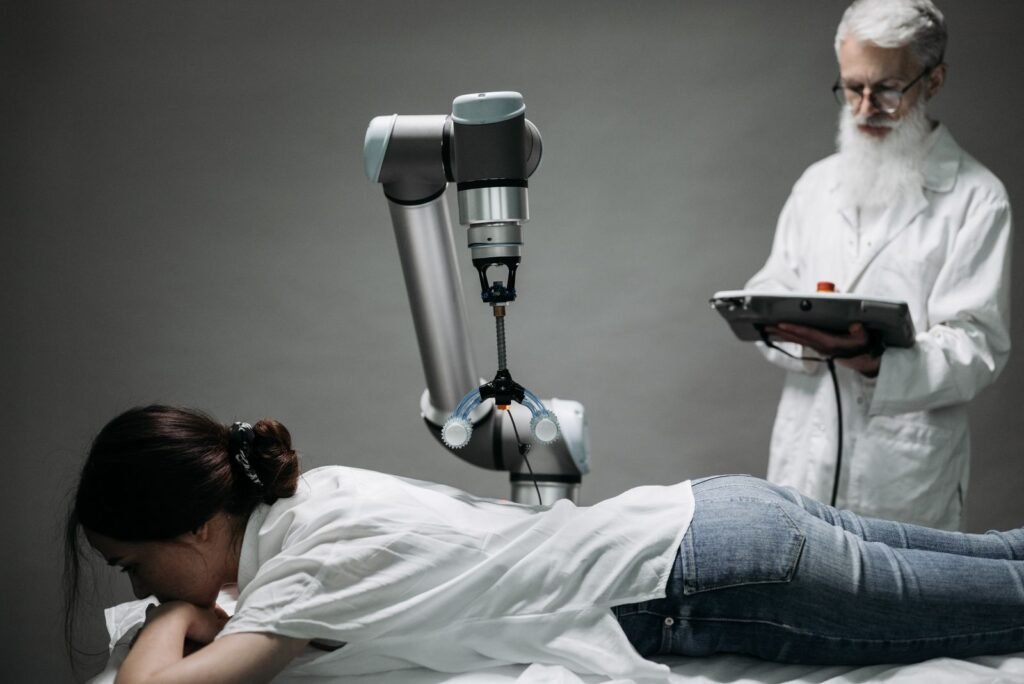
The most demanding form of interaction is collaboration: a human and a robot working together on a shared task. Collaborative robots, or cobots, are designed for this: they are lighter, slower, and equipped with force sensing so that contact with a person is detected and the robot stops or yields. The collaborative robot concept has transformed manufacturing, where cobots now assist with assembly, sanding, packaging, and quality inspection, taking over repetitive or strenuous parts of a task while the human handles judgment and dexterity.
Good collaboration requires shared understanding. The robot must know what the human is doing and what they intend; the human must know what the robot is doing and what it will do next. This is sometimes called common ground, and building it is an active research area: robots that track the human’s gaze, monitor task progress, and adapt their timing to the human’s pace collaborate far better than robots that simply execute a fixed program.
Task allocation is part of the design: which parts of a job suit the robot (repetition, precision, strength, endurance) and which suit the human (judgment, dexterity, handling exceptions)? The best collaborations play to both strengths. They also handle handover gracefully: when the robot encounters something it cannot handle, it should ask for help clearly and early, rather than failing silently or persisting with a wrong action.
Safety, Trust, and Acceptance
Safety is the foundation of interaction. Physical safety is governed by standards that specify force limits, speed limits, and how safety functions must be designed and tested. But perceived safety matters too: a robot can be technically safe and still make people uncomfortable if it moves too fast, too close, or too unpredictably. Designing for perceived safety — moderate speeds, generous distances, predictable motion — is what turns a safe robot into a welcome one.
Trust is built over time through reliable, transparent behavior. People trust robots that do what they expect, explain what they are doing, and fail gracefully — stopping safely and asking for help rather than behaving erratically. Trust is also fragile: a single frightening incident can undo months of good behavior, which is why deployment should start conservatively, with limited speeds and supervised operation, and expand as trust is earned.
Acceptance varies by person, culture, and context. Some people love robots; others are wary, especially when a robot looks very human-like, which can trigger discomfort known as the uncanny valley. Children, elderly people, and people with disabilities may interact with robots very differently, and good HRI design tests with diverse users rather than assuming one design fits all. Privacy matters too: robots with cameras and microphones collect sensitive data, and clear policies about what is recorded, where it goes, and who can access it are essential for acceptance, especially in homes and hospitals.
Trust, Acceptance, and the Future
Looking ahead, several trends will shape human-robot interaction. Language models are making robot communication far more natural: robots that can hold a conversation, explain their reasoning, and understand nuanced instructions will interact very differently from today’s menu-driven machines. Social robots — designed for companionship, education, and care — are becoming more capable, raising important questions about attachment, dependency, and the role of machines in emotional life.
Personalization is another trend. Robots that learn individual preferences — how a particular worker likes to be assisted, how a particular patient likes to be addressed — will interact more effectively, but personalization requires data, which brings privacy trade-offs that must be handled openly.
The deepest question is what role we want robots to play. Robots that assist, augment, and collaborate with people — extending human capability rather than replacing human judgment — are the most promising and the most accepted. Designing for that future means keeping humans in the loop, making robots transparent and controllable, and remembering that the goal of human-robot interaction is not a cleverer robot, but a better partnership between people and machines.
To keep learning, explore the Robotics & Physical AI category and the TechBist blog for related guides, and start from the TechBist homepage whenever you need a plain-language explanation of a new technology.
Designing Robot Behavior People Can Read
One of the most practical insights from HRI research is that robots should be legible: their behavior should make their intentions obvious to the people around them. A robot that is about to turn left should signal it — by slowing, by angling its body, by flashing a light — before it turns, not during. A robot approaching a person should slow down and approach from the front, where it can be seen, rather than appearing suddenly from behind. These are small design choices, but they transform how safe and comfortable a robot feels.
Legibility applies to failure as well. When a robot cannot complete a task, it should say so clearly — with a message, a sound, or a display — rather than stopping silently or repeating a futile motion. People are remarkably forgiving of robots that fail transparently and ask for help, and remarkably unforgiving of robots that fail opaquely. Designing failure behavior is therefore as important as designing success behavior, and it is often neglected because engineers focus on the happy path.
Testing legibility requires real people, not just engineers. A behavior that seems obvious to the team that built the robot may confuse a first-time user. User studies — watching people interact with the robot, noting where they hesitate, misunderstand, or step back — reveal problems that no amount of internal review will catch. The best HRI teams treat these studies as a core part of development, not as a final checkbox.
Robots in Sensitive Settings: Care, Children, and Privacy
Robots in hospitals, care homes, schools, and private homes raise questions that factory robots do not. In care settings, a robot may interact with people who are vulnerable, confused, or unable to consent in the usual way. Designers must think carefully about what the robot should and should not do: a robot that reminds a patient to take medicine is helpful; a robot that makes medical decisions is not its place. Clear boundaries, human oversight, and the ability for a person to override or dismiss the robot are essential.
Children deserve special care. Children bond quickly with robots, attribute feelings and intentions to them, and may trust them more than adults would. A robot designed for children should be honest about what it is — a machine, not a friend — even while being engaging and fun. It should also protect children’s data with particular strictness, because children cannot meaningfully consent to data collection, and the consequences of misuse last longer.
Privacy runs through all of this. Robots see and hear a great deal, and the data they collect — video of a home, audio of a hospital room, movement patterns in a workplace — is deeply sensitive. Good practice is to collect as little as possible, process locally where feasible, explain clearly what is recorded and why, and give people real control: the ability to pause recording, delete data, and know who can access it. Trust in robots, like trust in people, depends on respecting boundaries, and privacy is one of the most important boundaries there is.
The Business Case for Good Interaction
Good human-robot interaction is not just nice to have; it pays. In factories, cobots that workers trust and understand are used more, idle less, and produce fewer errors than cobots that workers avoid or misuse. The cost of a cobot that sits unused because staff do not trust it is the full purchase price with none of the benefit. Investing in interaction design — legible behavior, clear communication, good training — is what converts a robot purchase into actual productivity.
In service settings, the business case is about adoption and retention. A hospital robot that staff find easy to use gets integrated into daily routines; one that is confusing gets bypassed, and staff return to manual delivery. A home robot that families enjoy keeps being used; one that is annoying ends up in a cupboard. These outcomes are determined less by the robot’s specifications than by the quality of its interaction, which is why leading robotics companies now employ HRI specialists alongside mechanical and software engineers.
There is also a risk case. Poor interaction causes accidents, near-misses, and complaints, all of which carry costs — investigations, downtime, reputational damage, and in the worst cases, injury. Designing for safety, legibility, and trust from the start is far cheaper than retrofitting after an incident. Organizations evaluating robots should therefore ask vendors not just about speed and payload, but about interaction: how does the robot communicate, how does it fail, how do workers learn to use it, and what evidence exists from real deployments? The answers are a reliable indicator of whether the robot will succeed in practice.
Measuring Interaction Quality
How do you know whether a robot interacts well? The answer requires measurement, not just intuition. Task metrics come first: completion rate, time on task, error rate, and how often the robot needed human help. But interaction quality needs human metrics too: questionnaires that measure perceived safety, trust, ease of use, and satisfaction, administered to the actual people who work with the robot rather than only to its developers.
Behavioral observation adds a third layer. Watching people interact with a robot reveals hesitations, workarounds, and moments of confusion that questionnaires miss: a worker who always steps wide around a robot is signaling discomfort, even if they rate it as safe on a form. A user who repeatedly rephrases commands is signaling that the robot’s language understanding is failing, even if tasks eventually complete. Combining task metrics, self-reports, and observation gives a rounded picture, and tracking these measures over time shows whether interaction is improving as people gain experience or degrading as novelty wears off.
The practical point is to measure early and keep measuring. Interaction problems found during a pilot, with a handful of users, are cheap to fix; the same problems found after a fleet-wide rollout are expensive and embarrassing. A short pilot study with real users, measuring both task success and human experience, is one of the highest-value steps in any robot deployment.
Frequently Asked Questions
What is human-robot interaction?
Human-robot interaction (HRI) is the field that studies how people and robots perceive each other, communicate, collaborate, and build trust. It covers robot perception of people, communication channels like speech and lights, collaborative work, safety, and the psychological factors that make people accept or reject robots.
What is a cobot?
A cobot, or collaborative robot, is a robot designed to work safely alongside people without a safety fence. Cobots are typically lighter and slower than traditional industrial robots, with force sensing that stops or yields on contact. They assist with assembly, packaging, and inspection, handling repetitive or strenuous parts of a task while humans handle judgment and dexterity.
How do robots understand what people want?
Through multiple channels: speech recognition for spoken commands, gesture recognition for waves and pointing, gaze tracking for attention, and task context for inferring intent. Modern systems combine these with learned models of human behavior, and increasingly with language models that interpret nuanced instructions. No single channel is perfect, which is why good robots combine several.
Are robots that look human better for interaction?
Not necessarily. Human-like appearance can help with social interaction, but it can also trigger discomfort — the uncanny valley — when a robot looks almost but not quite human. For most practical tasks, a functional appearance with clear communication signals works better than a human-like face, and the best design depends on the task and the users.
How is trust in robots built?
Through reliable, predictable, transparent behavior over time: doing what is expected, explaining actions, failing gracefully, and respecting safety and privacy. Trust starts conservatively — limited speeds, supervised operation — and grows as the robot proves itself. A single frightening failure can damage trust significantly, so careful deployment matters.