

One AI agent can do a lot. A team of them, each with a different specialty, can do more — and fail in more interesting ways. Multi-agent AI systems, where several agents work together on a shared goal, are behind some of the most impressive demos in technology today: agents that research, write, critique, and revise together, or that coordinate robots in a warehouse. They are also one of the easiest ideas to overhype, because a team of agents is harder to build, test, and control than a single agent.
This guide explains multi-agent systems in plain language: what they are, how they coordinate, the patterns designers use, where they genuinely help, and where a single agent or a simple workflow would be better. If you are new to agents, start with our Python guide to how to build an AI agent for the single-agent foundations, then come back here for the team picture.
What Is a Multi-Agent System?
A multi-agent system is a system in which several AI agents interact to achieve a goal that would be difficult or impossible for one agent alone. Each agent has its own role, knowledge, tools, and perspective, and the agents communicate, divide work, and combine results. The classic definition of a multi-agent system comes from decades of research in distributed artificial intelligence, long before language models, and the core ideas still apply.
Think of a human example. Writing a research report alone means one person must find sources, read them, analyze them, write, and edit. A team can split the work: one person researches, another analyzes, a third writes, and a fourth reviews. The team can produce better work faster, but it needs coordination: who does what, how results are shared, and who makes the final decision. Multi-agent systems face exactly the same trade-offs, with software agents instead of people.
The agents in a system may be identical or specialized. In a homogeneous system, many similar agents each handle part of a large job, such as monitoring different sensors. In a heterogeneous system, agents have different roles, such as a researcher, a writer, and a critic. Most language-model multi-agent systems are heterogeneous, because specialization lets each agent use a focused prompt and tool set, which improves its reliability on its part of the job.
Why Use Multiple Agents Instead of One?
There are several genuine reasons to split work across agents, and it helps to separate them from the hype.
First, specialization improves quality. An agent prompted to be a careful fact-checker behaves differently from one prompted to be a creative writer. By giving each agent a narrow role, you get better performance on each part than a single generalist prompt usually delivers.
Second, division of labor enables parallelism. Independent subtasks can run at the same time, which can make large jobs faster. A research team can gather sources in parallel while an analyst prepares the framework for the report.
Third, debate and review catch errors. When one agent drafts and another critiques, mistakes that a single agent would miss often surface. This is similar to code review in software development: a second pair of eyes, even an artificial one, improves quality.
Fourth, different agents can use different tools and models. A research agent might use web search, a coding agent might run code, and a small fast model might handle routine steps while a larger model handles judgment calls. This flexibility can also save cost, because not every step needs the most powerful model.
These benefits are real, but they come with costs, which we will cover below. A good rule is to start with one agent and add more only when you can name the specific benefit: which role is missing, which bottleneck needs parallelism, or which error needs a reviewer. Adding agents because the idea sounds impressive is a reliable way to build an expensive, confusing system.
How Multi-Agent Systems Work
At the core, a multi-agent system needs three things: agents, communication, and coordination.
Agents are the workers. Each one is usually a language model with a role prompt, a set of tools, and access to shared or private memory. An agent’s role prompt defines its job, its constraints, and its style, much like a job description for a human team member.
Communication is how agents exchange information. The most common pattern is message passing: agents send each other text messages, either directly or through a shared conversation. Another pattern is a shared workspace, such as a blackboard, where agents post findings and read each other’s work. A third is structured handoffs, where one agent finishes a task and passes a defined result to the next, like an assembly line.
Coordination is how the system decides who does what and when. Some systems use a central orchestrator, sometimes called a manager or planner agent, which breaks the goal into tasks, assigns them, and combines results. Others are decentralized: agents negotiate, bid for tasks, or follow simple rules that produce coordination without a boss. Central orchestration is easier to understand and debug; decentralized coordination is more robust if one agent fails, but harder to predict.
Most practical systems combine these: a manager agent plans and assigns, worker agents execute, and a critic or reviewer agent checks results before they are accepted. The manager’s plan, the workers’ outputs, and the reviewer’s verdicts all form an audit trail, which is essential for understanding what happened when something goes wrong.

Coordination Patterns You Will Meet
Designers use a handful of recurring patterns. Knowing them helps you read product descriptions critically.
The pipeline pattern passes work through stages: research, then analysis, then writing, then review. Each agent handles one stage. Pipelines are simple and predictable, and they suit tasks with a natural order, such as producing a report.
The debate pattern lets two or more agents argue different sides of a question, then a judge agent or a human picks the best answer. Debate is useful when a task has genuine uncertainty or trade-offs, because it surfaces alternatives a single agent might ignore.
The hierarchical pattern uses a manager that decomposes a goal, assigns subtasks, and integrates results. This suits complex goals with many parts, such as planning a product launch, but the manager becomes a single point of failure and a bottleneck if it is overloaded.
The market pattern lets agents bid for tasks or negotiate resources, which suits distributed problems such as scheduling or logistics. It is powerful but harder to design well, and it is less common in language-model systems than in robotics or simulation.
The swarm pattern uses many simple agents following local rules, producing complex group behavior without central control, like ants building a colony. Swarms suit simulations and monitoring, but they are unpredictable for tasks that need precise outcomes.
No pattern is best in general. The right pattern depends on the task’s structure, how much you need to control the process, and how you will handle failures. A pipeline is a good default for content work; a manager pattern fits complex projects; debate fits decisions under uncertainty.

Communication: The Hidden Hard Part
If coordination is the brain of a multi-agent system, communication is its nervous system, and it is where many systems quietly fail.
Messages cost tokens, time, and money. A system where every agent tells every other agent everything will quickly become slow and expensive, and agents may drown in irrelevant context. Good systems limit what each agent sees to what it needs, summarize long histories, and use structured messages for handoffs rather than free-form chatter.
Messages can also mislead. An agent may state a conclusion confidently when it is actually guessing, and other agents may treat that guess as fact. This is why critical systems require evidence: an agent should cite the source or tool result behind its claim, and reviewers should check citations rather than trusting summaries.
A subtler problem is agreement without understanding. Agents can converge on an answer quickly because they share the same underlying model and biases, not because they independently verified it. Debate patterns help only if the debaters genuinely explore different views, which requires careful prompting. When evaluating a multi-agent product, ask how it avoids groupthink: does it use different models, different data, or different instructions for different agents, and does it check claims against sources?
Where Multi-Agent Systems Are Used
Multi-agent systems are used wherever work naturally splits into roles or parallel streams. In software development, one agent writes code, another writes tests, and a third reviews both, producing better code than a single agent usually does. In research, agents gather sources, extract data, and synthesize findings across many documents. In content production, agents draft, edit, and fact-check in sequence. In customer operations, agents triage, investigate, and resolve cases, escalating to humans when needed.
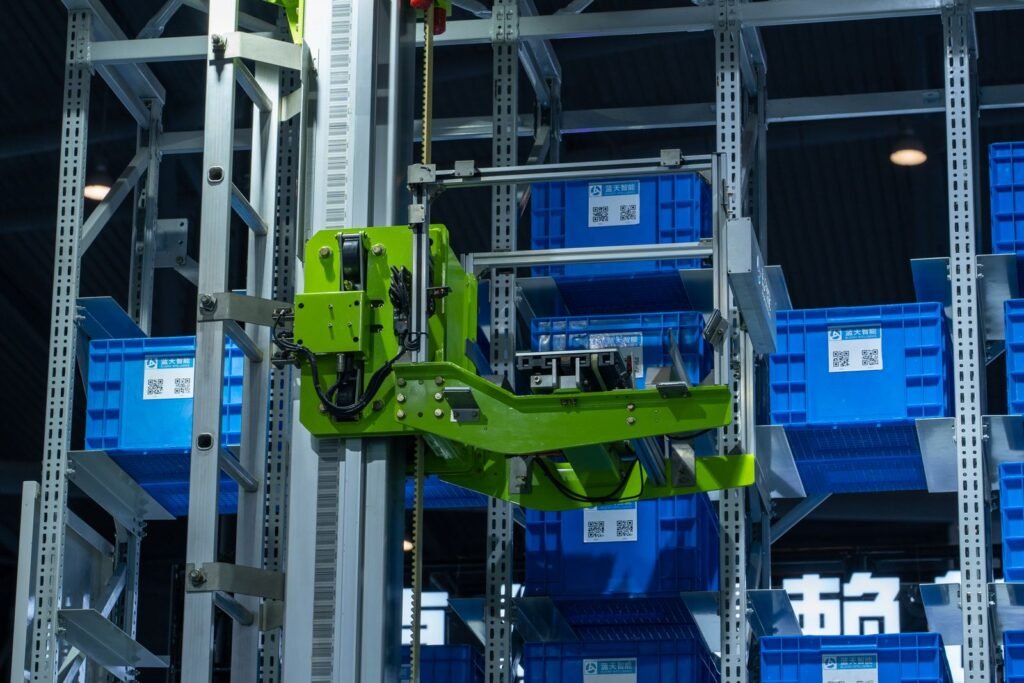
In robotics and logistics, multi-agent systems coordinate fleets: warehouse robots dividing picking tasks, delivery drones planning routes, or traffic systems balancing flows. These systems often use simpler agents than language-model teams, but the coordination ideas are the same. IBM’s overview of multi-agent systems describes how businesses are applying these ideas across industries, from customer service to supply chains.
In simulation and science, multi-agent systems model economies, ecosystems, traffic, or social behavior, where many interacting agents produce patterns no single agent could. In games, they control non-player characters that cooperate or compete. These uses show the breadth of the idea: multi-agent thinking applies far beyond chatbots.
Benefits and Costs, Honestly Weighed
The benefits are specialization, parallelism, error-checking through review, and flexibility in tools and models. The costs are equally real and often underestimated.
Cost is the most immediate: each agent step uses model calls, and a team multiplies that. A five-agent system can easily cost several times a single-agent solution for the same task. Latency grows too, because agents wait for each other, and debugging becomes harder, because a failure may involve a chain of agent decisions.
Reliability is the second cost. More agents mean more ways to fail: miscommunication, conflicting assumptions, loops where agents ask each other for clarification forever, or a manager that assigns the wrong tasks. Testing a multi-agent system requires many runs and careful logging, because the same goal can produce different agent interactions each time.
Control is the third cost. With one agent, you can inspect its steps. With a team, you must inspect conversations, handoffs, and the manager’s decisions. Without good tooling for tracing these, a multi-agent system becomes a black box that is hard to trust for important work.
The honest conclusion is that multi-agent systems are worth it when the task genuinely needs roles, parallelism, or review, and when you have the testing and monitoring to manage the complexity. For simple tasks, a single agent or a fixed workflow is cheaper, faster, and easier to trust. Start simple, measure, and add agents only when the measurement justifies it.
Designing Your First Multi-Agent System
If you decide to build one, start small: two agents, not ten. A good first project is a writer and a reviewer: one agent drafts a short report from given sources, and another checks it against those sources and lists any unsupported claims. This teaches the core skills: role prompts, handoffs, review criteria, and logging.
Define roles crisply. Each agent’s prompt should state its job, its tools, what it should not do, and what a good output looks like. Vague roles produce vague collaboration. Define handoffs as structured outputs: the researcher returns a list of findings with sources, not a free-form essay, so the writer can use it reliably.
Add a stopping rule. Decide in advance how many rounds of review are allowed, and what happens when agents disagree: does the manager decide, does a human decide, or does the system report the disagreement? Systems without stopping rules can loop, with agents politely asking each other for clarification until the budget runs out.
Log everything: every message, tool call, and decision, with timestamps. When the system surprises you, and it will, logs are the only way to find out which agent misunderstood what. Build a simple viewer for these logs early, even if it is just a formatted text file, because you will read it often.
Finally, evaluate against a single-agent baseline. Run the same tasks through one agent and through your team, and compare quality, cost, and time. If the team is not clearly better on the tasks that matter, simplify. The goal is a better outcome, not a more impressive architecture.
The Future of Multi-Agent Systems
Several trends are shaping the field. Agents are becoming better at using shared tools and standards, which makes it easier to build teams from different providers’ components. Orchestration frameworks are maturing, with better support for tracing, approvals, and state management. And researchers are studying how to make agent teams more reliable: better debate protocols, verification steps, and ways to detect when agents agree for the wrong reasons.
Longer term, multi-agent systems may become the default way complex knowledge work is organized, with human teams directing agent teams rather than doing every step themselves. That future depends on solving the trust problem: humans must be able to see what agent teams did, why, and with what evidence, and to intervene when needed. The technology for capability is advancing faster than the technology for oversight, and closing that gap is the most important work in the field.
For now, the practical advice stands. Understand single agents first, add teamwork only where it earns its keep, design roles and handoffs carefully, and demand visibility into every step. Done well, multi-agent systems can tackle work that no single agent could handle alone. Done carelessly, they produce expensive confusion. The difference is design, testing, and honesty about what the system actually achieved.
To continue, revisit the single-agent foundations in our guide to how to build an AI agent with Python, explore the full AI Agents & Agentic AI category, and follow new explainers on the TechBist blog. You can start from the TechBist homepage whenever you need a plain-language guide to a new technology.
Frequently Asked Questions
What is a multi-agent AI system in simple terms?
A multi-agent AI system is a team of AI agents working together on a shared goal. Each agent has a different role, such as researcher, writer, or reviewer, and they communicate, divide work, and combine results, much like a human team with specialized members.
How is a multi-agent system different from a single AI agent?
A single agent handles a whole task itself, using tools and a reasoning loop. A multi-agent system splits the task across specialized agents that collaborate, which can improve quality through review and parallelism, but it also adds cost, latency, and coordination complexity that a single agent avoids.
Do multi-agent systems need a manager agent?
Not always, but most practical systems use one. A manager or orchestrator breaks the goal into tasks, assigns them, and combines results, which makes the system easier to understand and debug. Decentralized systems without a manager are more robust to single failures but harder to predict and control.
What problems do multi-agent systems solve best?
They solve best the tasks that naturally split into roles or parallel streams: research and report writing, software development with separate coding and review, content pipelines, customer case resolution, and coordination of robot fleets or logistics. They are less suited to simple, single-step tasks where one agent is enough.
What are the biggest risks of multi-agent systems?
The biggest risks are cost and complexity, hidden failures in agent communication, agents agreeing on wrong answers without independent verification, and loops where agents keep asking each other for clarification. Good logging, clear roles, structured handoffs, stopping rules, and human checkpoints are the main defenses.
1 thought on “Multi-Agent AI Systems Explained”